People have been increasingly concerned about their living environment long before the start of the COVID-19 pandemic. When we are indoors, we continuously exhale carbon dioxide (CO2), which can cause CO2 levels to rise—especially in enclosed spaces—and lead to a decline in air quality. Especially in high-traffic indoor spaces, such as classrooms, meeting or training rooms, daycare centers, restaurants, etc., CO2 levels can quickly become too high. At a CO2 level exceeding 1000 ppm (parts per million), this can be perceived as unpleasant and lead to symptoms such as headaches, dizziness, fatigue, and difficulty concentrating. For this reason, carbon dioxide (CO2) detectors are already required for indoor spaces in some countries.
CO2 detectors can help monitor indoor CO2 levels and provide early warning when air quality deteriorates. This allows measures to be taken to improve air quality, such as opening windows or turning on ventilation systems.
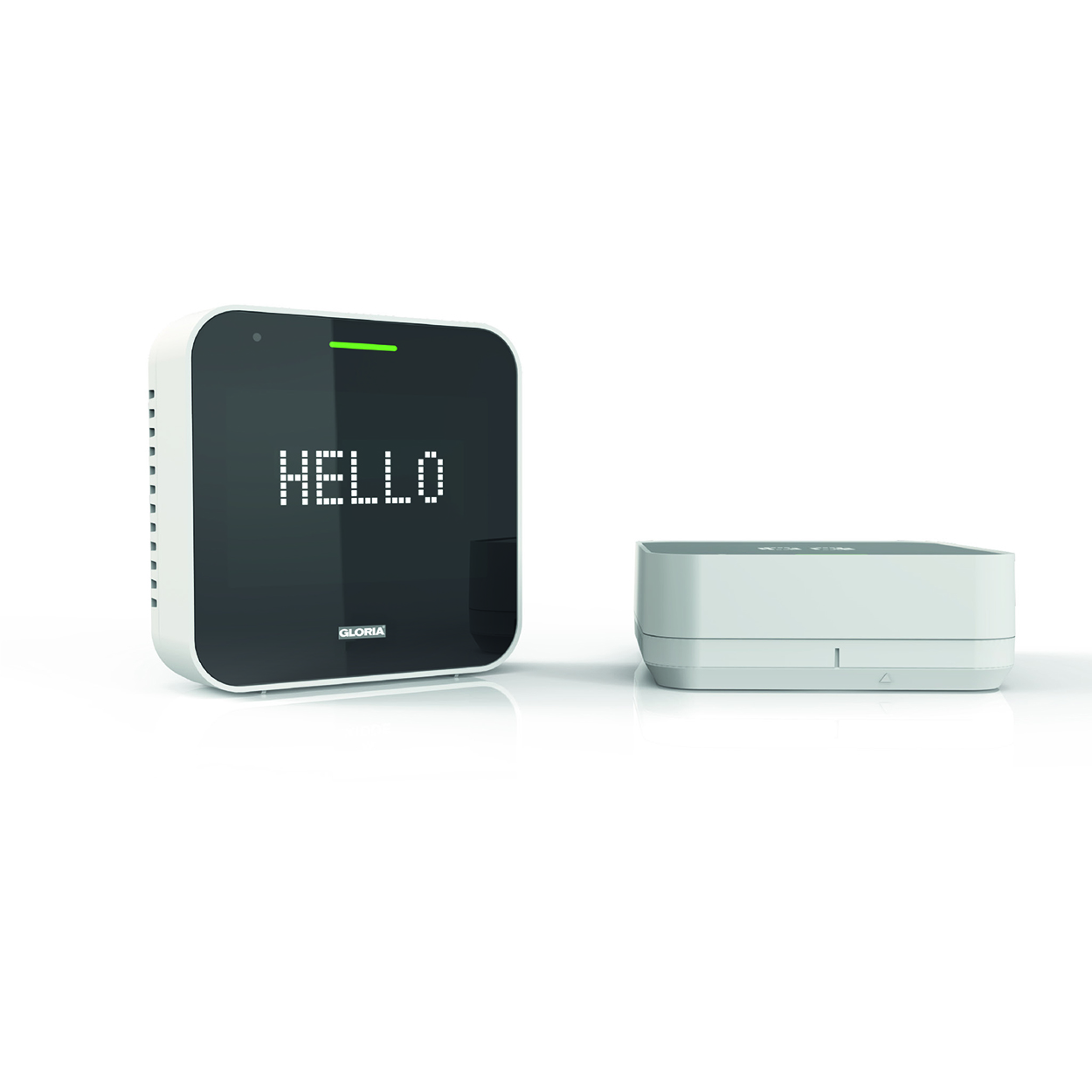
In addition, they can also help reduce the risk of infection in enclosed spaces, as good air circulation can limit the spread of pathogens. The new GLORIA CO2 detector (GCO2M10) offers the perfect solution for this, providing detailed information on indoor air quality as well as guidance on necessary actions.
But when exactly is the CO2 concentration indoors too high, and how can you tell?
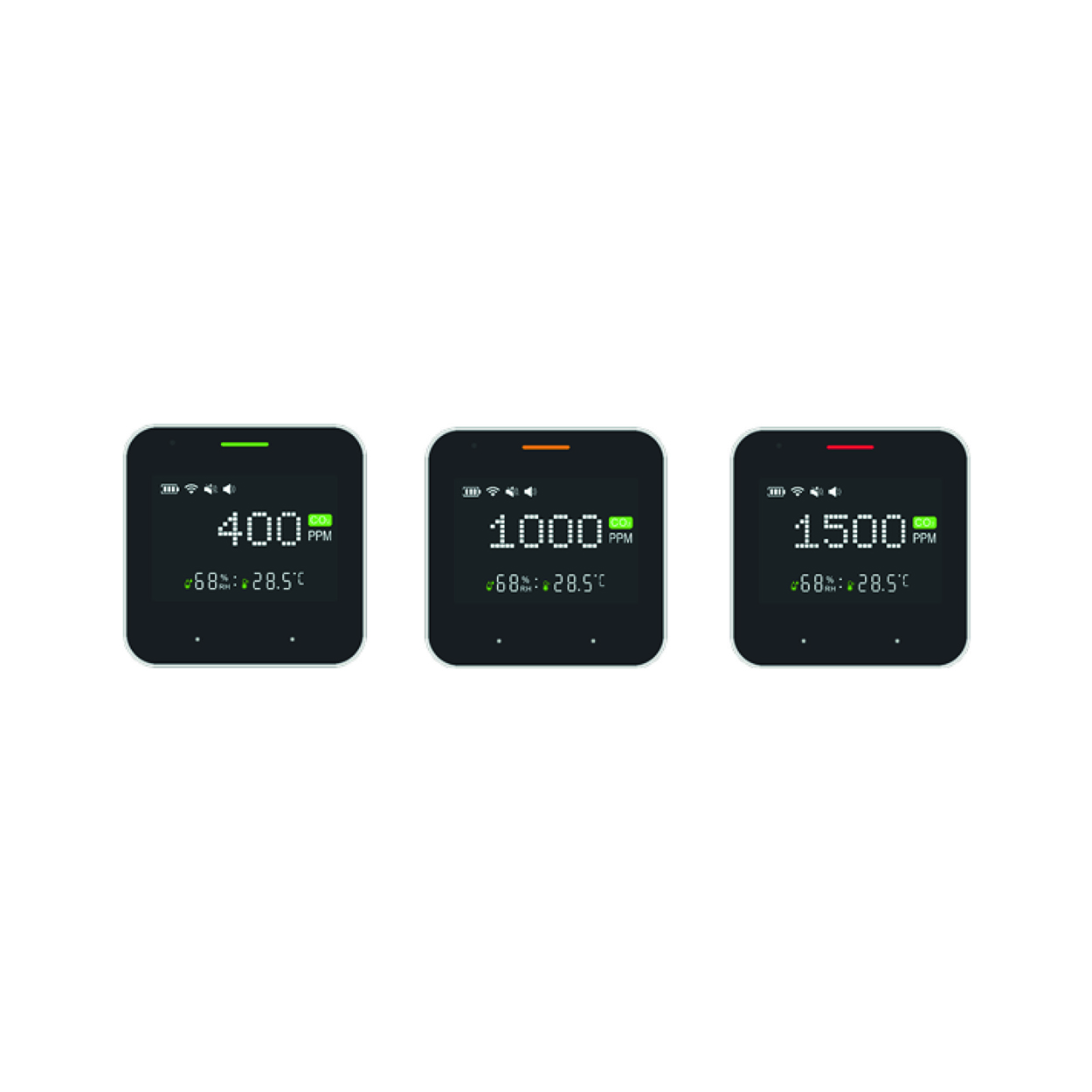
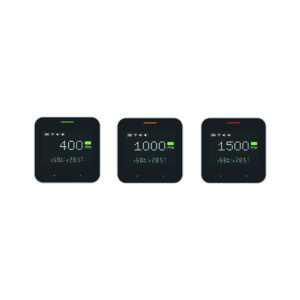
The new GLORIA CO2 detector (GCO2M10) is your indicator for good air quality and continuously measures the CO2 level in enclosed spaces using an intuitive traffic light system.
Everything’s in the green zone! The display on the CO2 detector lights up green, indicating that the CO2 concentration is between 0 and 1000 ppm. Everything is fine.
Briefly ventilating the room is a good idea! The display on the CO2 detector lights up orange, indicating that the CO2 concentration is between 1000 and 1500 ppm. Brief ventilation is recommended.
Ventilation is absolutely necessary! The indicator on the CO2 detector is lit red, indicating that the CO2 concentration is above 1500 ppm. This concentration is significantly too high, and ventilation is absolutely necessary